Modeling Pilot Flight Performance in a Cognitive Architecture
Oct 26, 2021·,·
1 min read
Rongbing Xu
Shi Cao
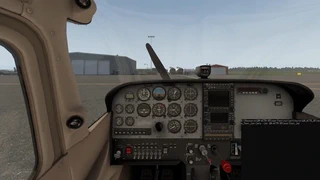 Image credit: Rongbing Xu
Abstract
Cognitive architecture models can support the simulation and prediction of human performance in complex human-machine systems. In the current work, we demonstrate a pilot model that can perform and simulate taxiing and takeoff tasks. The model was built in Queueing Network-Adaptive Control of Thought Rational (QN-ACTR) cognitive architecture and can be connected to flight simulators such as X-Plane to generate various data, including performance, mental workload, and situation awareness. The model results are determined in combination by the declarative knowledge chunks, production rules, and a set of parameters. Currently, the model can generate flight operation behavior similar to human pilots. We will collect human pilot data to examine further and validate model assumptions and parameter values. Once validated, such models can support interface evaluation and competency-based pilot training, providing a theory-based predictive approach complementary to human-in-the-loop experiments for aviation research and development.
Date
Oct 26, 2021 10:00 AM — 10:50 AM
Location
Virtual Conference
This presentation at the 65th Human Factors and Ergonomics Society Annual Meeting demonstrated our cognitive architecture-based pilot model for simulating flight operations. The work showcases how computational cognitive modeling can support aviation research and training development.